
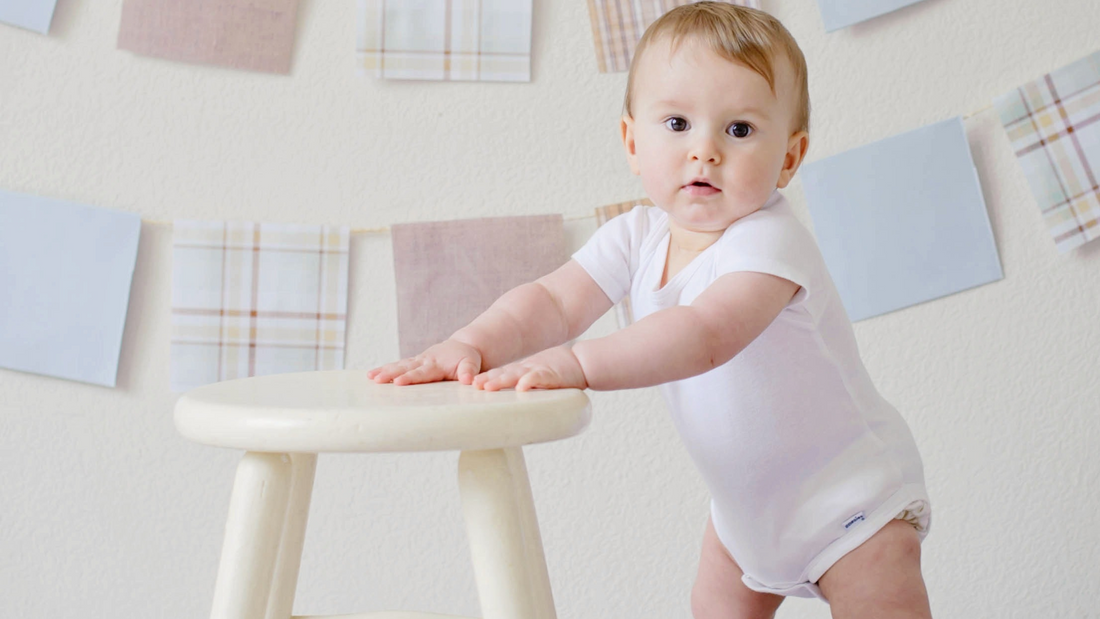
Diaper comparison: Disposable diapers, cloth diapers or elimination communication – what is right for your baby (and the environment)?
Share
The diaper question: A jungle of options?
Congratulations on your new arrival! During this exciting time with a baby, parents face countless decisions. One of them concerns a topic we encounter daily: diapers. Disposable diapers, cloth diapers, or even elimination communication – the selection is vast, and each option has its pros and cons. Especially in Switzerland, where sustainability and convenience are highly valued, the decision is often not easy.
This article aims to help you navigate the diaper jungle. We compare the most common diapering methods and show you their advantages and disadvantages for your baby, your daily routine, and the environment.
Disposable diapers: The classic – convenient, but...?
Disposable diapers are the undisputed classic and virtually indispensable in modern baby life. They are available in drugstores and supermarkets throughout Switzerland and score points above all for their ease of use.
Advantages of disposable diapers:
- Convenience: Simply put it on, dispose of it after use – unbeatable in terms of practicality, especially when traveling or at night.
- Absorbency: Keeps baby bottoms reliably dry, even for extended periods.
- Hygiene: Single use minimizes effort and is considered hygienic.
- Available everywhere: Easily available in every supermarket and drugstore in Switzerland.
Disadvantages of disposable diapers:
- Environmental impact: They produce enormous amounts of waste that is barely biodegradable. On average, a baby "produces" one ton of diaper waste before being potty trained!
- Cost: Expensive in the long run, as new diapers have to be bought constantly.
- Ingredients: Contain chemicals and plastics that can irritate delicate baby skin.
- Production: Resource-intensive manufacturing with high energy and water consumption.
Cloth diapers: The sustainable alternative – more work, but...?
Cloth diapers have experienced a revival in recent years, as more and more parents in Switzerland are looking for more environmentally friendly alternatives. Modern cloth diapers are a far cry from the old muslin diapers and offer many advantages.
Advantages of cloth diapers:
- Environmentally friendly: Significantly less waste compared to disposable diapers. Reusable and durable.
- Healthy for baby's skin: Mostly made from natural materials such as organic cotton, more breathable and less irritating to the skin.
- Cost savings: Cheaper in the long run, as cloth diapers can be reused.
- Trendy designs: Modern cloth diapers are available in many colors and patterns, even as a fashion statement!
- Promoting potty training: Some parents report that children who wear cloth diapers become potty trained earlier.
Disadvantages of cloth diapers:
- More effort: Washing, drying and folding the diapers requires more time and organization.
- Purchase costs: Initial purchase may be more expensive than disposable diapers (but cheaper in the long run).
- On the go: You will need a diaper bag with spare diapers and a container for used diapers.
- Less absorbent? Modern cloth diapers are very absorbent, but may need to be changed more often than disposable diapers.
Diaper-free (or "elimination communication"): The natural way – completely without diapers?
Elimination communication, also known as "elimination communication" or "natural baby hygiene," is not actually a diaper-based method, but rather an alternative approach. It is based on the idea of recognizing the baby's natural elimination signals and holding them over a potty or sink in time.
Advantages of diaper-free:
- Environmentally friendly: No diaper waste! The most sustainable option of all.
- Healthy for baby's skin: No diaper, no diaper rash! Baby's skin can breathe freely.
- Bonding: Intensive communication and interaction with the baby strengthens the parent-child bond.
- Early toilet training? Babies can learn to control their bladder and bowels earlier through diaper-free methods.
- Free: No expenses for diapers.
Disadvantages of diaper-free:
- High effort: Requires a lot of time, observation skills and commitment from the parents.
- Initially uncertain: This can lead to "accidents" at first, until you can reliably recognize the baby's signals.
- Not always suitable for everyday use: Can be challenging in certain situations (e.g., when traveling, in daycare).
- Acceptance: Not everyone is open to this method and may encounter a lack of understanding from their surroundings.
Comparison table: Diapers, cloth diapers, elimination communication
|
criterion |
Disposable diapers |
Cloth diapers |
Diaper-free |
|
Environment |
Very stressful |
Less stressful |
Very environmentally friendly |
|
Baby skin |
Potentially appealing |
Skin-friendly |
Very skin-friendly |
|
Cost |
Up (ongoing) |
Meals (one-time payment) |
Very low |
|
Expense |
Small amount |
Medium |
High |
|
practicability |
Very high |
Medium |
Medium/Low (depending on lifestyle) |
|
Health |
Neutral/Negative |
Positive |
Very positive |
Which diaper is right for you?
There is no "best" diaper! The choice depends on your personal priorities, your lifestyle, and your baby's needs.
- Disposable diapers are ideal if maximum convenience is important to you and you want to keep the effort to a minimum.
- Cloth diapers are the right choice if you value sustainability and baby health and are willing to invest a little more time.
- Diaper-free is suitable for parents who are looking for a natural and attachment-oriented approach and are willing to engage intensively with their baby's needs.
Our tip for parents:
Why not combine the best of both worlds? Many families in Switzerland opt for a mix: disposable diapers for outings and nighttime, cloth diapers for home. Or you could try part-time elimination communication (EC) to experience the benefits of this method.
Conclusion: Find your own individual diapering path!
No matter which diapering method you choose, the most important thing is that you feel comfortable with it and that it works for you and your baby. Do your research, try out different options, and trust your instincts. And remember: there's no "right" or "wrong" way—just your own personal diapering way!